Loyalty Commercial Contribution (LCC)
The incremental commercial value attributable to loyalty.
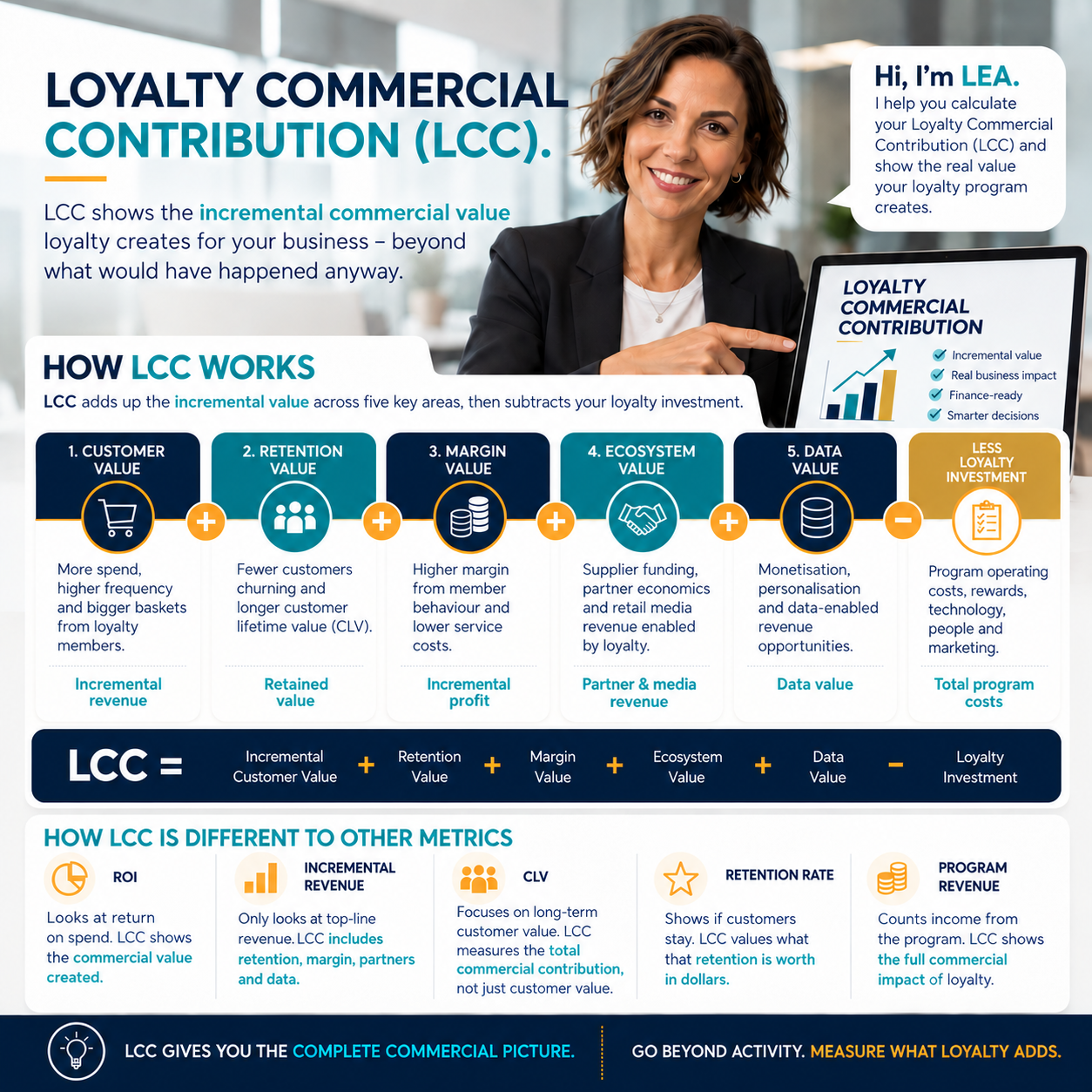
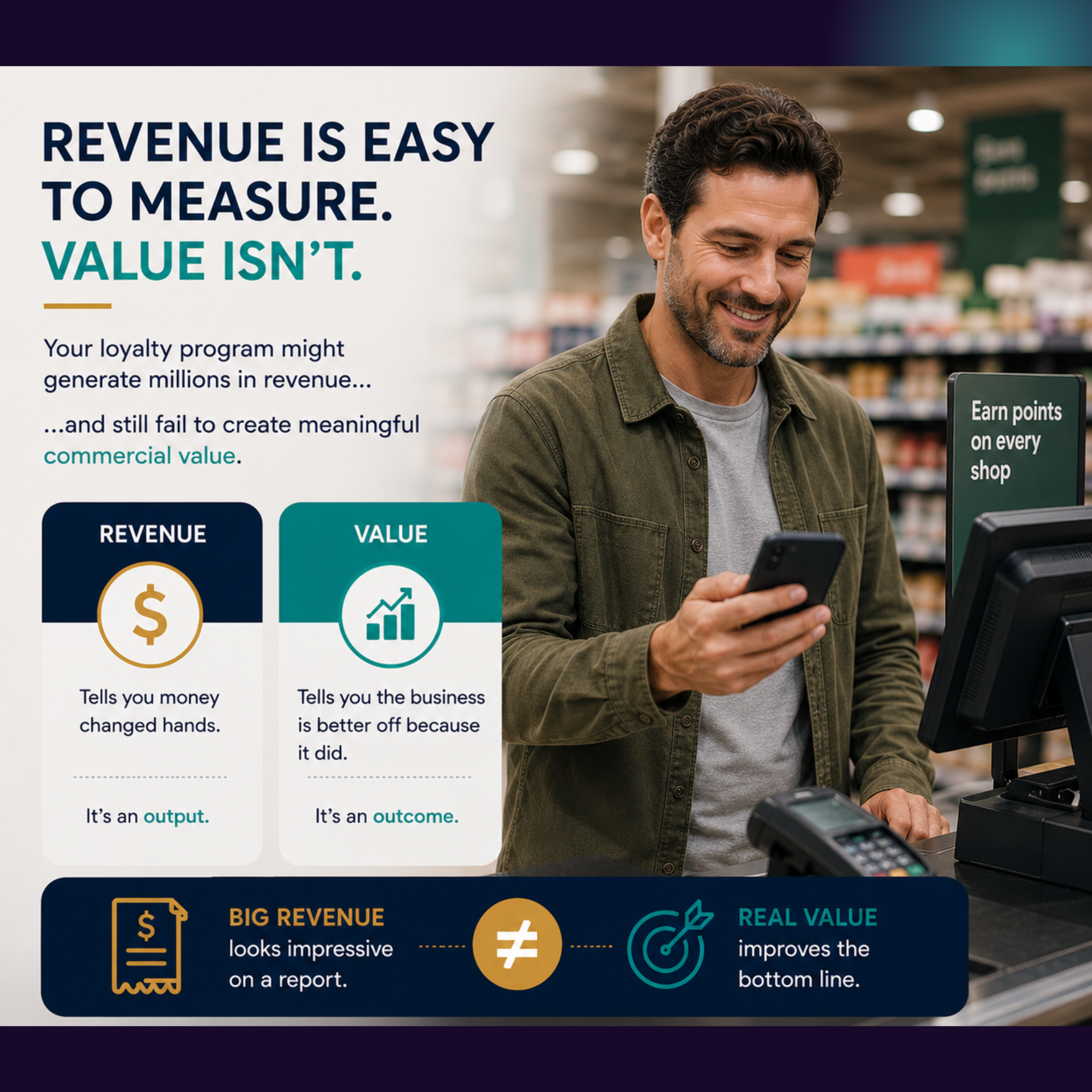
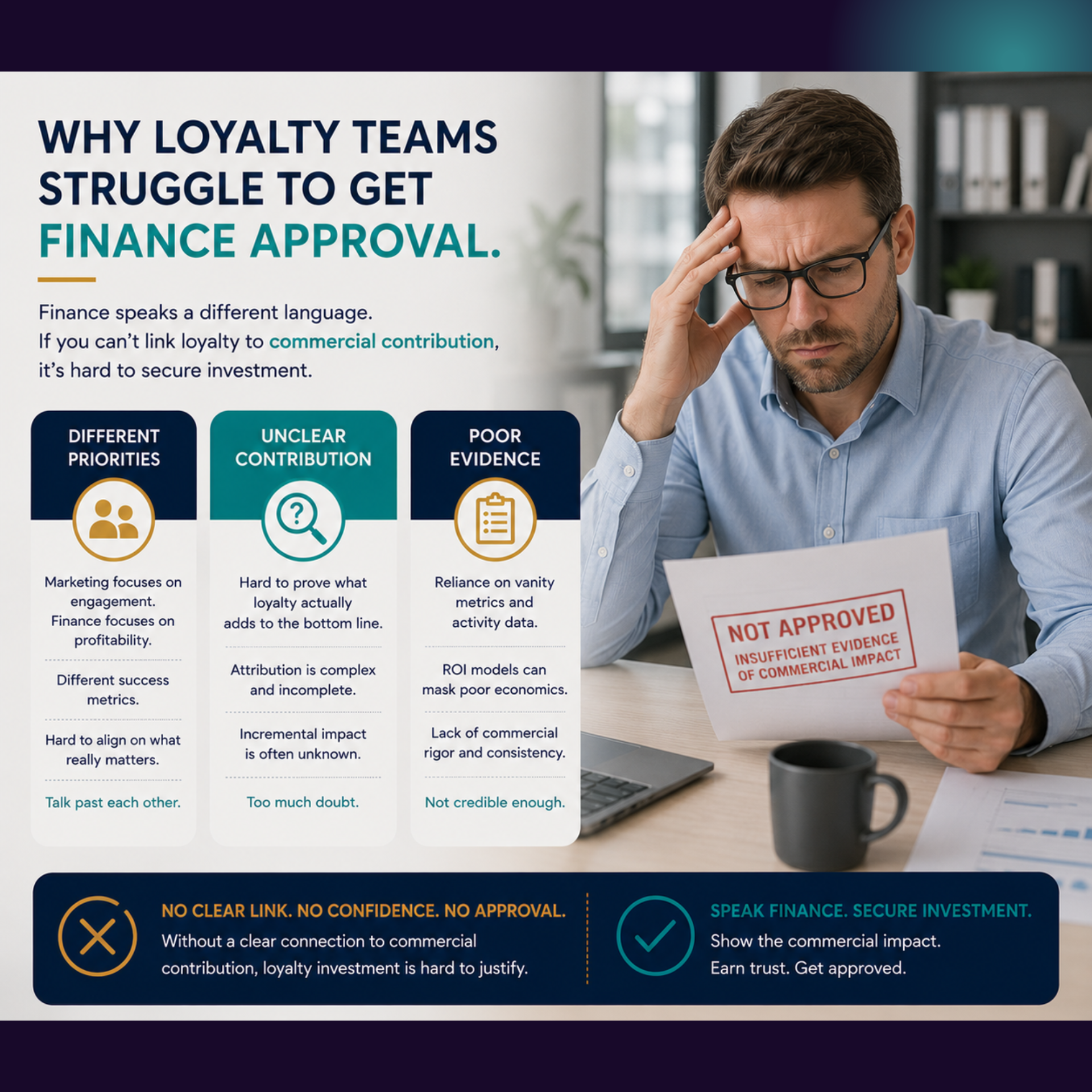
Loyalty Commercial Contribution is a new measurement framework designed specifically to identify, attribute and aggregate the incremental commercial value contributed by loyalty.
The loyalty industry does not lack measurement metrics.
The importance of measuring loyalty is not a new concept.
LCC answers the question that every loyalty practitioner should be asking:
"How much incremental commercial value is attributable to loyalty?"
LCC is a framework for measuring the incremental commercial value that would not have existed, or would have been lower, without loyalty.
LCC identifies and aggregates the different forms of incremental commercial value attributable to loyalty. It brings together the different sources of incremental value created by loyalty into one commercial measurement framework.
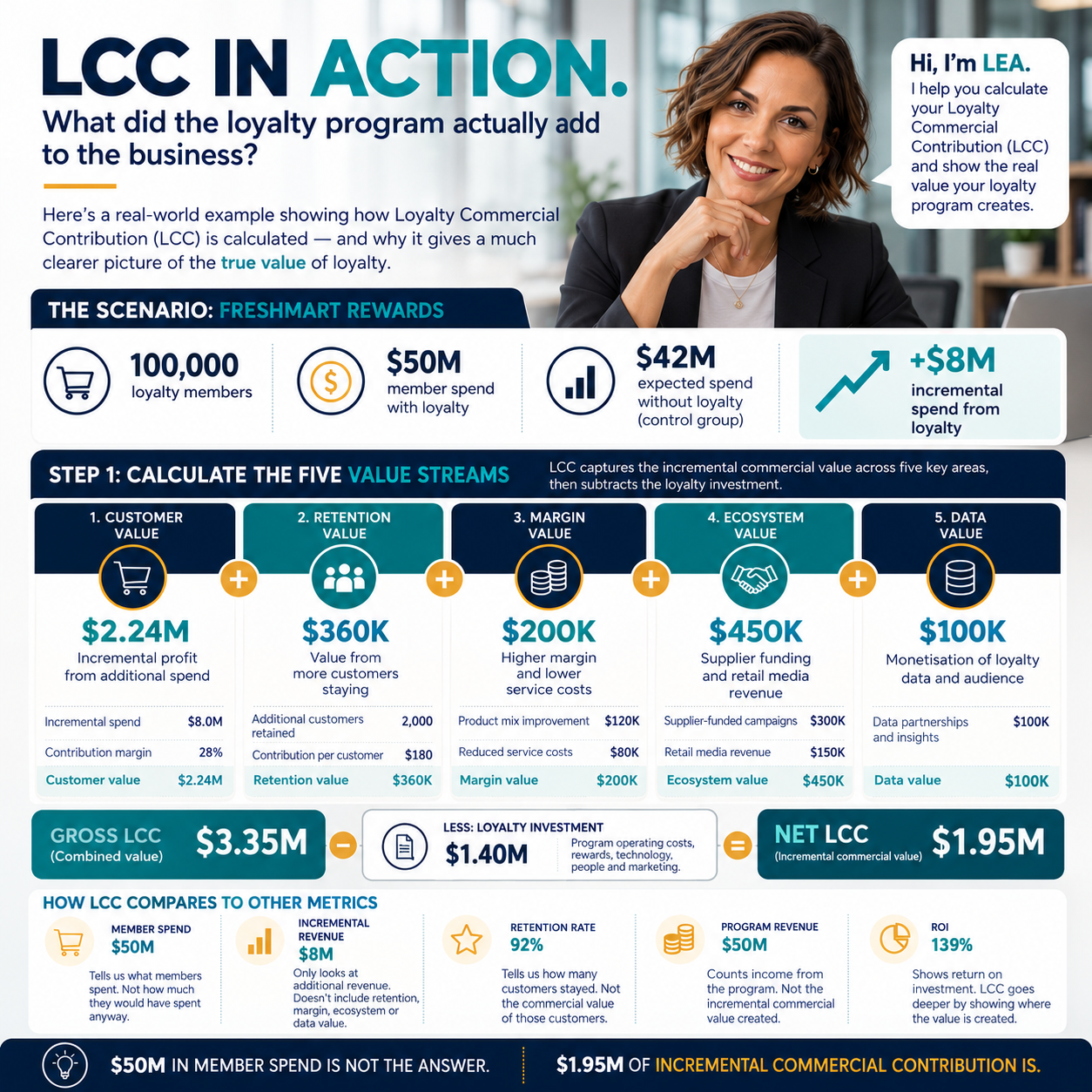
Across customer, retention, margin, ecosystem and data, LCC reconciles the value against the investment required to create it.
What is LCC?

The loyalty industry talks about a range of commercial measurements
ROI
✖️
CLV
➕
Incremental Revenue
➗
Retention Rate
➖
Breakage
🟰
Member Spend
∞
ROI ✖️ CLV ➕ Incremental Revenue ➗ Retention Rate ➖ Breakage 🟰 Member Spend ∞


ROI = What return did we get on investment?
LCC = What commercial value did loyalty contribute?
LCC is not ROI.
ROI measures efficiency. LCC measures contribution.
ROI tells you what you got back relative to what you invested. Loyalty Commercial Contribution (LCC) answers a different question: how much incremental commercial value is actually attributable to loyalty?
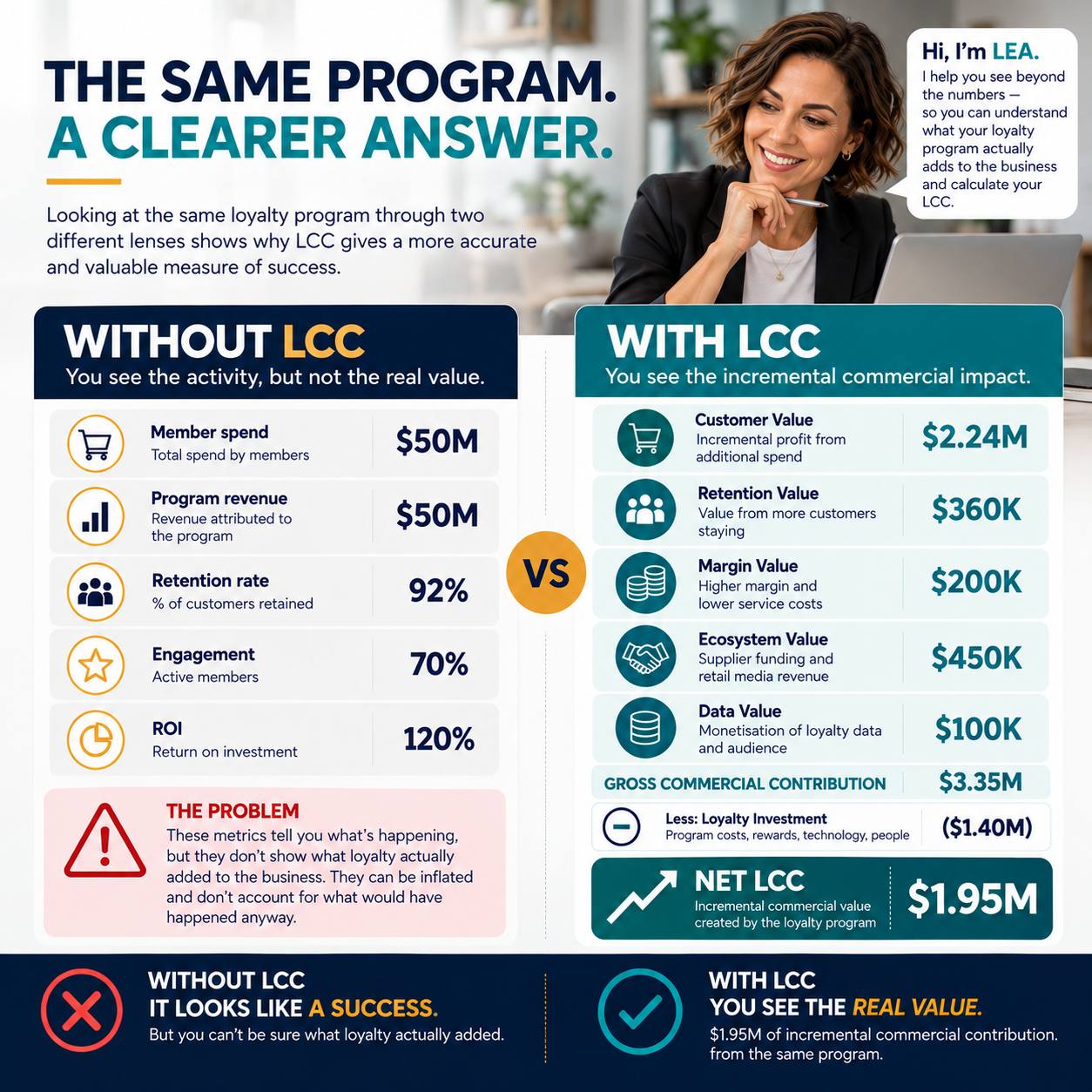
A program can have a strong ROI while still overstating its true value if member spend, retention or revenue would have occurred anyway. LCC focuses on incrementality and attribution — isolating the commercial value loyalty actually created for the business.
CLV = What is the customer worth?
LCC = How much of that value is attributable to loyalty?
LCC is not CLV.
CLV measures customer value. LCC measures loyalty's contribution to that value.
A high-value customer may have been just as valuable without the loyalty program, so attributing their entire lifetime value to loyalty can overstate its impact.
Loyalty Commercial Contribution focuses on incrementality and attribution, isolating the additional commercial value created because loyalty exists.
CLV tells you what a customer is worth. LCC tells you what loyalty contributed to that value.
Incremental Rev. = What additional revenue was created?
LCC = Was it created by loyalty?
LCC is not Incremental Revenue.
Incremental Revenue measures additional sales. LCC measures the commercial value those additional sales create.
Incremental revenue identifies sales that would not have occurred without the loyalty program, but revenue alone doesn’t tell the whole commercial story. Loyalty Commercial Contribution goes further by considering the broader incremental value attributable to loyalty — including margin, retention, ecosystem and data value — and ultimately the investment required to generate it.
Incremental Revenue tells you what extra was sold. LCC tells you what loyalty actually contributed.
Retention Rate = Who stayed?
LCC = What retention was loyalty-attributable?
LCC is not Retention Rate.
Retention Rate measures who stayed. LCC measures the value loyalty created by helping them stay.
A higher retention rate can be a positive signal, but it doesn’t prove that loyalty caused the improvement — or quantify what that retention is commercially worth.
Loyalty Commercial Contribution focuses on attribution and value, isolating the incremental retention attributable to loyalty and translating it into commercial contribution.
Retention Rate tells you who stayed. LCC tells you what loyalty-attributable retention was worth.
Member Spend = What did members spend?
LCC = What did loyalty add?
LCC is not Member Spend.
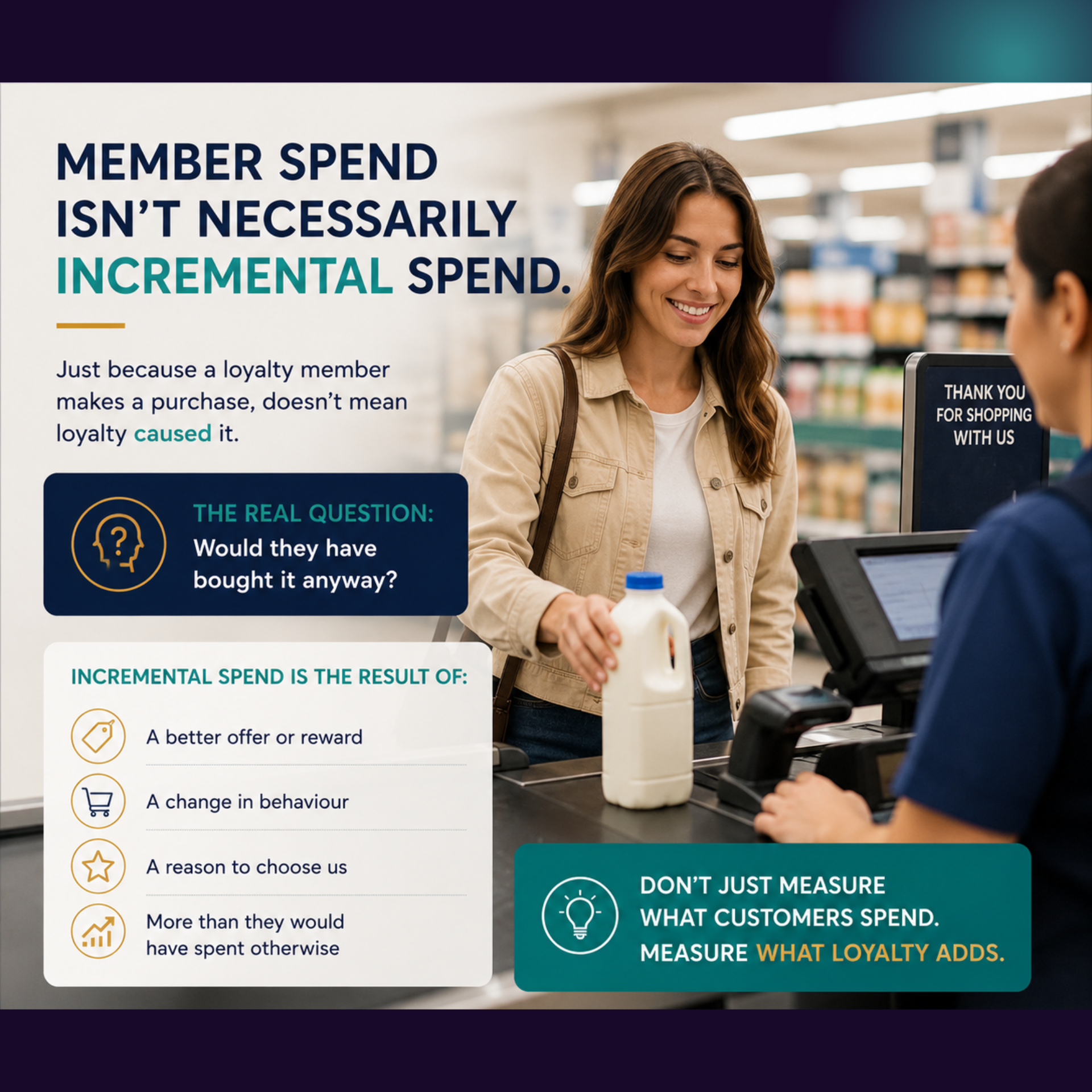
Member Spend tells you what members spent. LCC tells you what loyalty contributed to that spend.
A member may spend $1,000 with a business simply because they were already a customer.
That $1,000 is member spend, but it isn't necessarily incremental value created by loyalty. LCC focuses on the portion of commercial value that can genuinely be attributed to the loyalty program — rather than automatically treating all member activity as a loyalty outcome.
Member Spend tells you what members spent. LCC tells you what loyalty added.
Breakage = What rewards weren't redeemed?
LCC = What value was loyalty attributable?
LCC is not Breakage.
Breakage tells you what rewards weren't redeemed. LCC tells you whether loyalty created incremental commercial value.
Breakage can be an important component of loyalty program economics, but unredeemed rewards aren't inherently a measure of program success.
A program could generate significant breakage while delivering little incremental customer or business value — or have low breakage while creating substantial value elsewhere.
Breakage tells you what wasn't redeemed. LCC tells you what loyalty contributed.